
Humanizing McKinsey’s Creative Process
Client
McKinsey & Company
Services
Service Design, User Research, Cultural Change Strategy, Behavioral Design
Year
2018–2019
This multi-year project aimed to evolve McKinsey & Company’s internal processes and client communication strategy, optimizing the way consultants deliver intelligence reports and briefings. As a Senior Product Design Manager, I led the design of a new service experience to support a cultural shift in how technical information is communicated, moving from exhaustive documentation to more engaging, scannable, and readable content. The goal was to make McKinsey’s reports more impactful and accessible to clients, fostering better understanding and quicker decision-making.

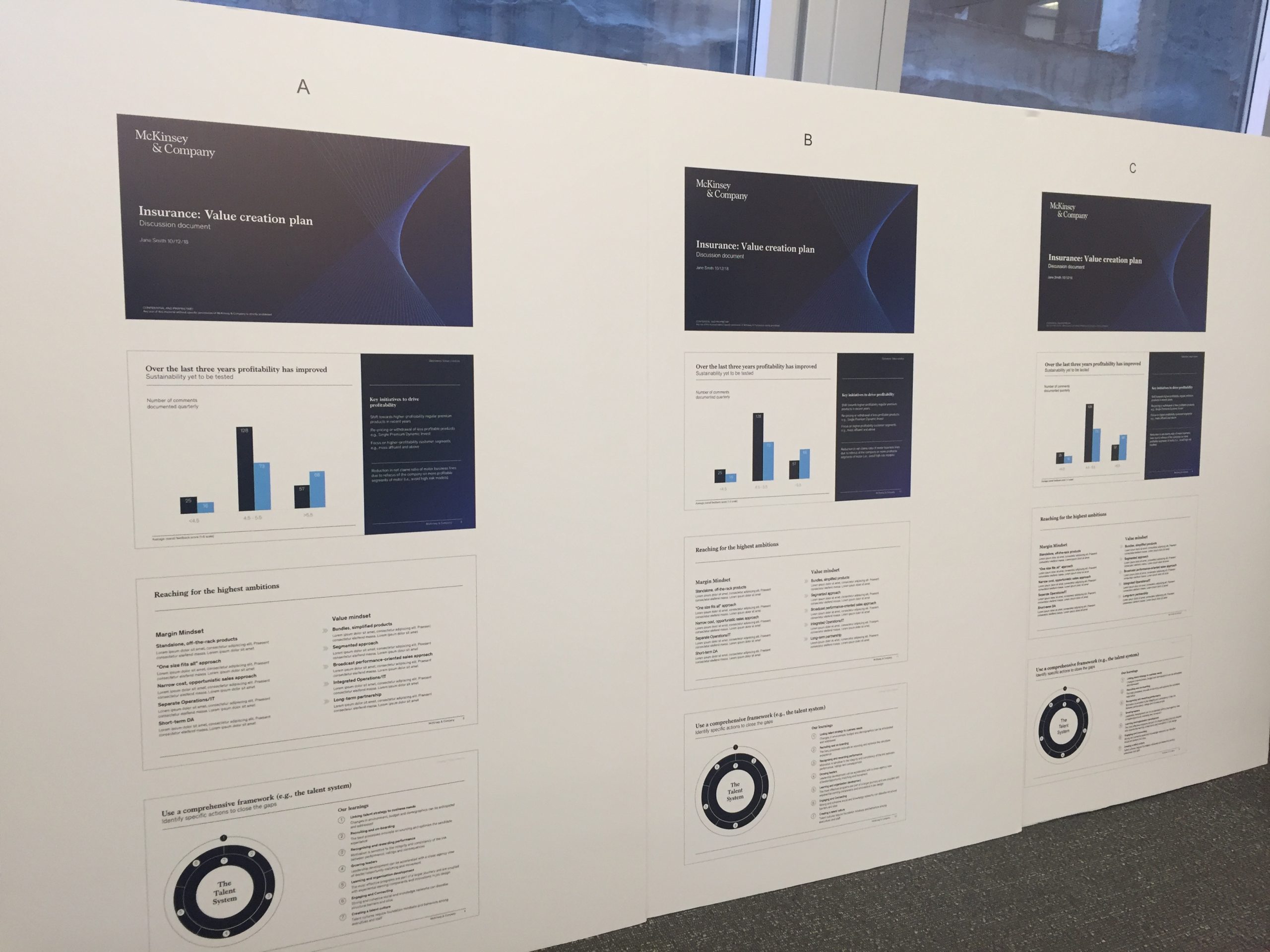
Challenge
McKinsey consultants were accustomed to providing highly detailed, technical documentation in their client briefings. However, a cultural shift was underway, as clients increasingly demanded information that was not only data-rich but also more digestible and user-friendly. This change in client expectations clashed with the ingrained work habits of consultants, who were used to creating long-form, exhaustive reports. The challenge was to shift internal behaviors to align with this new approach to communication while maintaining the integrity and depth of information that McKinsey is known for.
Solution
To address this, I conducted extensive ethnographic research, including interviews with McKinsey consultants to understand their daily work processes, behaviors, and the inherent challenges they faced in creating client reports. I also engaged with the global design team to gain insights into the existing collaboration challenges and opportunities. This deep cultural investigation helped uncover critical touchpoints where service design interventions could create impactful change.
I designed a service journey map that considered the needs and behaviors of every stakeholder involved in creating client reports—from consultants to slide designers. I identified the specific behaviors and mindsets that needed to shift and highlighted areas where design interventions could facilitate these changes. By introducing more scannable and readable formats, I aligned the design with both consultants’ workflows and the clients’ evolving needs for actionable, easily digestible insights.
Outcome
The redesign resulted in a more streamlined and effective process for creating reports that were both comprehensive and client-friendly. Consultants were better equipped to adapt to the cultural shift and deliver information in a more engaging, concise manner, which improved client satisfaction and overall engagement. The service design interventions also fostered a new way of thinking within McKinsey about how information can be communicated to meet both internal and client expectations, ultimately driving a more efficient and impactful way of delivering value. The project contributed to the company’s long-term goal of scaling client communications while nurturing a culture of continuous improvement and behavioral change within the organization.